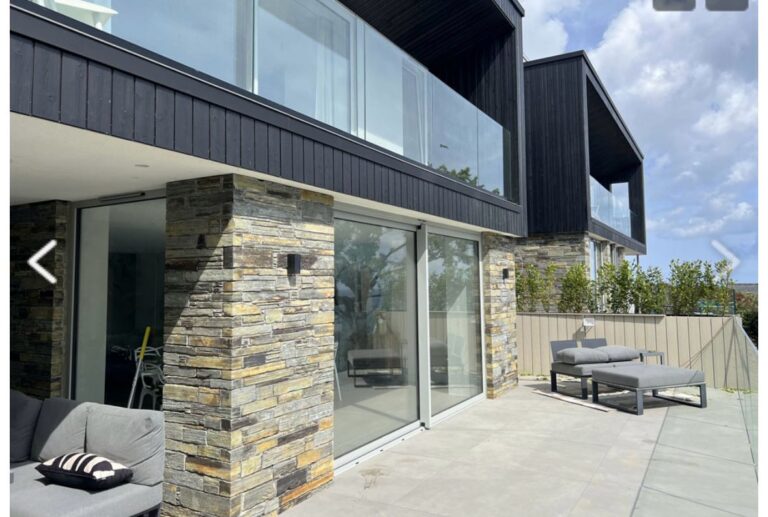
Understanding Balustrades in High-Wind and Coastal Environments – The Challenges
Coastal regions are notorious for their corrosive conditions. The combination of salt spray, humidity, and temperature variation creates the perfect environment for metal degradation. Over time, even small amounts of salt can pit stainless steel and eat through inferior coatings.
In high-wind zones, the pressure on a balustrade can be extreme. When wind hits a glass barrier, it doesn’t just push — it creates suction and oscillation forces that stress the system’s fixings and anchor points. If these components aren’t rated or installed correctly, the structure can flex or fail, especially on exposed balconies or rooftops.

Choosing the Right Glass
Not all glass is created equal. For coastal and elevated sites, strength and safety must come first:
- Laminated toughened glass is the gold standard — the interlayer holds fragments in place if breakage occurs.
- Thicker glass panels (13.5–21.5 mm for frameless systems) handle greater wind loads and reduce flexing.
- Heat-soaked glass prevents spontaneous breakage from thermal stress.
Tip: Always confirm your system meets BS 6180:2011 (Barriers in and about buildings) and Eurocode 1 (Wind Actions) for proven wind resistance.
Selecting Metalwork That Survives the Sea Air
Stainless Steel Grades
- Grade 316 (Marine Grade) stainless steel resists chloride corrosion and is ideal for coastal areas.
- Grade 304 looks similar but corrodes rapidly in salty environments.
- For severe coastal or offshore sites, Duplex 2205 or anodised aluminium systems offer superior performance.
Protective Coatings
Powder coating or anodising adds a durable barrier against salt and moisture. Lighter colours reflect UV and extend lifespan.
Fixings & Anchors
- Use A4 (316) stainless fixings — avoid zinc-plated or mild steel components.
- Choose Rezolv™ watertight stanchion and glass channel mounting system to prevent trapped water.
- Use structural silicone or non-corrosive spacers to avoid galvanic reactions between dissimilar metals.
Design & Engineering Considerations
Wind Load Testing
Each site has unique exposure conditions. Balustrade systems should be engineer-tested to handle the pressures of your building height and location. Frameless systems can use hidden channels, while post-supported options add rigidity for very exposed balconies.
Drainage & Detailing
- Allow water and salt to drain freely.
- Avoid flat ledges where residue can collect.
- Use sloped glass channels and micro-drain holes in fixings.
Maintenance Access
Design with cleaning and inspection in mind. If access is difficult, corrosion and build-up are more likely to go unnoticed.
Maintenance and Aftercare
Even marine-grade materials require care. A simple routine can extend the life of your balustrade:
- Rinse regularly with fresh water (monthly near the coast) to remove salt.
- Use mild detergent and a soft cloth — avoid harsh chemicals.
- Inspect fixings annually for corrosion or looseness.
- Recoat powder-coated aluminium every 10–15 years.
- Replace damaged seals or gaskets promptly.
Professional Tip: Opt for drainable base channels or open-bottom systems to prevent trapped moisture and corrosion.
Aesthetic Longevity Meets Engineering Precision
Frameless glass balustrades beautifully frame a coastal view — but that minimalist design depends on precision engineering. Certified, marine-grade systems ensure invisible strength beneath the surface beauty.
At Revive Balustrade, we specialise in glass balustrades built for performance and precision, from beachfront homes to high-rise developments. Every installation is tested for safety, strength, and durability — so you can enjoy your view with total confidence.
Final Thoughts
Building balustrades in high-wind and coastal environments comes with challenges, but with the right materials and design, your balustrade can stand strong for decades. Invest once — and enjoy safety, style, and peace of mind for years to come.
Need advice on a coastal balustrade project?
Contact Revive Balustrade for tailored recommendations, site-specific assessments, and durable designs for the UK’s toughest conditions.